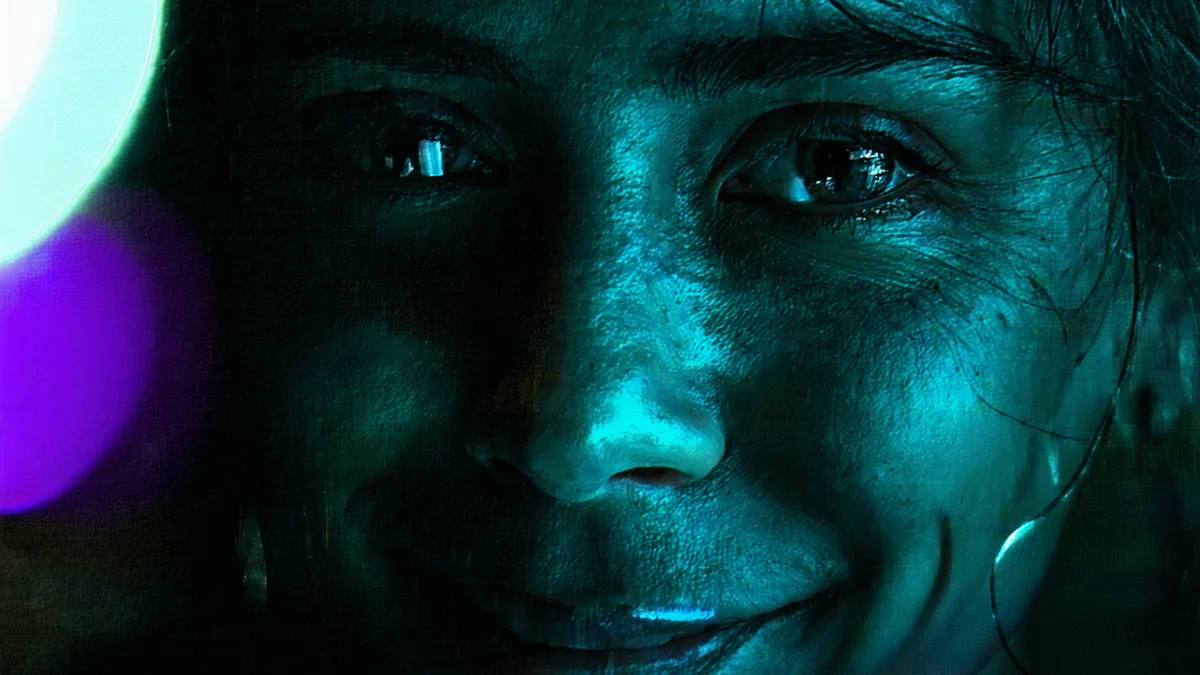
The conventional wisdom about online poker goes like this: no tells, pure math. You can't see anyone, so the psychological layer goes away, and what's left is hand selection, position, bet sizing, and reads based on betting patterns. That's true for text-only play. Once you add video, it stops being true — because a person's face is one of the richest behavioral channels they have, and you now have it in a box in the corner of your screen for every single hand.
You don't get everything you'd have at a physical table. The body language of a player stacking chips nervously, the leg movement under the table, the way they hold their cards — all of that is below the camera frame and gone. But that's not as much of a loss as it sounds. Most of the meaningful tells at a real table come from the face and voice anyway. And over video, you have both.
What the face is actually showing you
Facial micro-expressions — the involuntary movements that flash across the face in under half a second — are well-studied in behavioral research contexts. The core insight isn't that strong or weak hands produce specific facial signatures. It's subtler: people leak emotional state, and emotional state correlates with hand strength in ways players themselves often don't notice.
Relief and disappointment are the two clearest emotions that show on the face at a poker table. When a card hits the board that changes the texture of the hand significantly, watch the faces before anyone speaks or acts. A player who flopped a strong draw and just missed it on the turn will often show something — a brief flattening of expression, a micro-drop of the eyes — that a player who doesn't care about that card won't. You won't catch it consciously every time. But over several hours of play with the same people, you start accumulating data about how their face moves when they're excited versus when they're managing disappointment.
This is different from a specific twitch or blink tell. It's more like pattern recognition of someone's emotional baseline. Video poker gives you the time and the frame to do that in a way that anonymous chat-based play never could.
The timing tells that video makes visible
Traditional online poker timing tells — the snap-call, the long tank followed by a minimum raise — survive in video poker and get a layer added on top. When someone is thinking, you can see that they're thinking. When someone already knows what they're going to do, the behavioral preparation is often visible before the action shows up in the game UI.
Watch for the player who reaches for their mouse or leans toward the screen slightly before it's their turn. That lean-in often indicates they're planning to act, not just waiting passively. Watch for the player who settles back in their chair after looking at their hole cards — a slight physical exhale-and-relax that often means the cards were either very good (strong hands sometimes produce a controlled settling-in) or genuinely harmless (they're not worried about the situation).
None of this is a reliable formula. We're not saying "leaning forward equals bluff." What we are saying is that motion and posture are information, and video gives you a continuous stream of it that anonymous text-based poker doesn't.
Voice tells: the ones people forget about
Most of the "tells over video" conversation focuses on visual cues and ignores the audio layer, which is a mistake. Voice quality shifts significantly with stress. When someone is placing a bet they're nervous about — either a big bluff or a big value bet where they're genuinely afraid of being raised — you'll often hear it in minor ways: a very slight drop in volume, a quicker delivery, a sentence that trails off a touch faster than usual.
The inverse is also telling. The player who has a very strong hand and is representing strength tends to be unusually measured. The confident "I raise" that comes out calm and unhurried, with a slight pause before the amount, is worth being suspicious of in ways that an impulsive rapid-fire raise announcement isn't.
Table talk volume over time is another signal. A player who's been chatty all evening goes notably quiet in a particular hand. That quiet isn't neutral — it usually means cognitive load has increased, which usually means something important is happening in their hand. The reverse, a suddenly talkative player on a hand where they've been quiet all night, is worth noting too.
What doesn't work over video
The whole-body physical tells that characterize live poker coaching material — stance, posture in the chair, hand placement, chip handling — are mostly invisible below the camera frame. You're working with roughly a head-and-shoulders shot in most home game setups, so anything below the shoulders is gone.
Pupil dilation, the poker tells of the eyes that get a lot of attention in coaching literature, aren't visible at standard video call resolution. You'd need a significantly higher camera quality and lighting setup for that to be a usable signal, and most people aren't playing video poker in those conditions.
And the core limitation of any tells-based read applies here as well: tells are only as useful as your sample size with a specific player. Stranger danger, in a sense — you can't reliably read tells on someone you've played with for forty-five minutes the same way you can read tells on a friend you've played with regularly for years. The patterns that reveal information about a specific person take time to establish. Treat early-session tells as hypotheses, not conclusions.
The meta-game of knowing you're being watched
Video poker adds something that neither in-person play nor text-based play has in quite the same form: continuous mutual observation. At a physical table, people aren't always looking at each other. They look at their cards, at the board, at their chips. Eye contact is occasional and loaded when it happens. At a video table, everyone's face is in the frame all the time.
Good video poker players learn to use this. Controlled neutral expression is a skill — the same face when you have top pair as when you have a stone bluff. A consistent camera setup helps too: same lighting, same background, same position relative to the camera. Players who shift their camera position or background between sessions introduce variance into their visual presentation that attentive opponents can pick up as a pattern shift.
The most interesting video poker games aren't the ones where you're successfully reading everyone else. They're the ones where you're managing your own presentation while picking up what you can, and the person across the screen is doing exactly the same thing. That's the game inside the game, and video makes it live in a way that anonymous online poker never did.